Tahlequah's Tour of Grief
Tahlequah's Tour of Grief
What orcas can teach us about grief
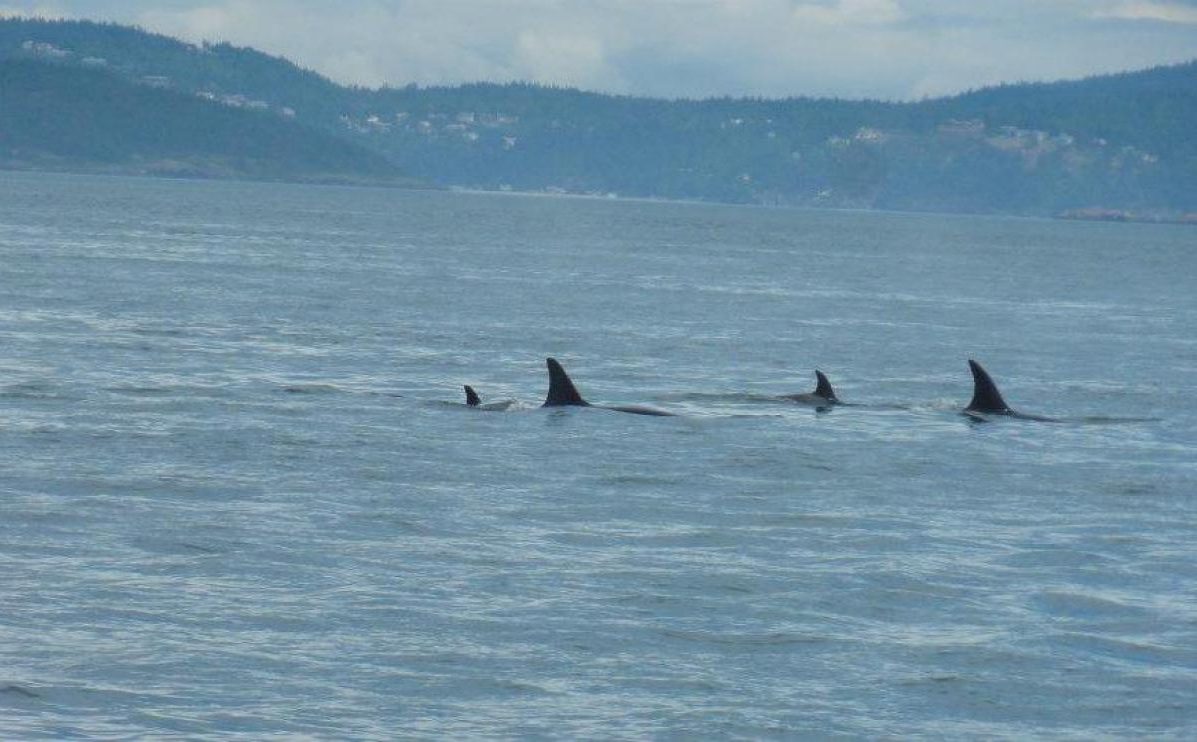
In 2018, a Southern Resident killer whale named Tahlequah (J-35) mourned the death of her newborn calf, Tali, in a very extreme way. For seventeen days and over 1,000 miles, she supported Tali's lifeless body on her rostrum around the Salish Sea off the coast of Washington. Relentlessly, Tahlequah plowed through the waters, accompanied by her pod. After seven days, Tahlequah's family members assisted by keeping Tali afloat so that the grieving mother could eat and rest.
Researchers noted that by the ninth day, Tali's little body showed signs of decomposition. For a few days, J pod fell off the radar but were sighted again on the 16th day. Tahlequah continued to keep Tali with her as she swam in the waters surrounding the San Juan Islands. On the 17th day, the grieving mother released her deceased calf and rejoined J pod.
Tahlequah went on to have two more calves: Phoenix (J57) born in July of 2020, and another in December of 2024 - J61. J61 passed shortly after birth and her lifeless body was carried by Tahlequah around the waters of the Puget Sound. Voyaging on another tour of grief, Tahlequah swam in mourning for over 11 days.
Most people aren’t aware that prior to Tali and J61's deaths, Tahlequah adopted her sister Polaris' two offspring after Polaris passed away. One of those calves wasn't weaned yet and starved to death while a ward of Tahlequah.
As a counselor who specializes in Prolonged Grief Disorder, I've wondered if Tahlequah's experience with the tragic wasting death of her niece complicated her grief experiences for the loss of her own two offspring, Tali and J61, whom she toured around the Salish Sea. Witnessing her adopted calf slowly wither and die, and to be unable to do anything to save the little one must have been excruciatingly painful for Tahlequah. Was her tour of grief akin to a truncated form of Prolonged Grief Disorder?
Grief Responses Relate To Attachment, Impact Functioning
Just as in other species, bonding between mother orcas and calves begins prior to birth. Orca gestation period lasts 12 -18 months, a significant amount of time for a mother orca’s body to accommodate for and connect with her baby. The bond continues heavily after birth as calves are milk-dependent for approximately 3 years, requiring the pair to stay in very close proximity.
As baby orcas traverse the ocean, they swim next to their mothers in what is called the echelon position. Akin to drafting, orca babies travel very close to and slightly behind their mothers near the dorsal fin. This hydrodynamic is advantageous for the calf, allowing her to keep up with the pod, to conserve energy, and to keep her close to the mother who can help her surface for breathing. The mother orca keeps vigilant watch over her young.
The bond between mother and young is so strong that throughout her entire lifetime, a mother orca assists her adult male sons by foraging food for them. Grandmother orcas will also adopt their grandchildren if their daughters pass away. A mother orca’s entire purpose in life is caring for the lives of her family members.
Mother orcas extend their love even further. Orcas have been known to demonstrate interspecific alloparenting - adopting other species’ offspring. This interspecies empathy is yet another indication of a great depth of emotion. Scientists have reported that the amygdala, the part of the mind involved in experiencing emotions, is proportionally larger in orcas than in humans. Orcas are known to have a greater capacity for emotional and social intelligence. It is thought that orcas may experience the world with a greater emphasis on social bonds and emotional awareness compared to humans.
Orcas' grief experiences, I believe, are as deeply felt, if not deeper, than human grief.
In human prolonged grief disorder, a person’s daily functioning is greatly affected. Some of my patients report not being able to eat. Some have no desire to bathe and go for weeks without. Others can’t get off the couch or out of their beds other than to go potty. Rumination about the deceased can be all encompassing.
Orcas don’t have the option to stop. Tahlequah had to keep swimming. Other orcas in her pod were seen helping her during her tour by keeping the dead calf afloat so she could feed and rest. Scientists were concerned that Tahlequah herself was going to die due to the extreme expenditure of energy and lack of rest and food. If she were human, I suspect Tahlequah would be a good candidate for therapy. Thankfully orcas stay in pods with family members, supporting one another during their grief. I believe it’s safe to say that they love one another.
Orcas deserve our love, too. The Southern Resident Orcas of the Salish Sea are a critically endangered species. It is estimated that less than 80 currently exist. Collective efforts by humans can positively impact their survival.
Ways You Can Support Orcas
Reduce pollution by minimizing single-use plastics and chemicals in your home.
Use non-toxic or biodegradable cleaning products.
Reduce stormwater runoff by practicing rain gardening.
Support salmon recovery because wild salmon are their primary food. Advocate for their restoration.
Support organizations working to restore salmon runs, like those focused on the Snake River.
Choose sustainably sourced seafood.
Minimize boat impact by keeping your distance, slow down, and avoid sudden changes in direction.
Choose reputable whale watching operators committed to conservation.
Support groups like The Whale Museum or Orca Conservancy through donations or volunteering.
Participate in local beach cleanups and habitat restoration events.
Contact your representatives to support legislation for orca and salmon recovery.
Shop local and choose organic to reduce impact on the environment.
Report whale sightings to help researchers.