Survivor's Guilt: A Personal Essay
Survivor's Guilt
I could have saved him...
“One! Two! Three!!... Come on, you candy a$$ Marine!”
Of all the personal trainers my late husband Bob interviewed, the one he contracted with in 2010 was a former Army soldier, turned police officer, turned boxer, turned fitness trainer who believed in hard core work. Flipping semi tires down the road. Waggling thick battle ropes. Executing Bulgarian split squats. The prescribed diet was hard core, too. Low carbs. Low fat. Low calories. One day, Bob’s “snack” was 5 almonds. My over 350 pound 6’7” Marine was supposed to find sustenance and satisfaction in 5 puny almonds? Um, no.
But Bob had great willpower and was committed to sloughing off the burdensome weight. And, like all Marines, Bob didn’t believe that the words “quit” and “defeat” existed. They were not a part of his vernacular. Devil Dogs win or die. Failure never occurs. Seriously, it just doesn’t.
Being the wife of a Devil Dog required me to grow into an understanding of the Marine mindset and how to co-exist and support someone who has exceptionally high expectations of self and duty. Additionally, my Marine was an Alphas of alphas. Fueled for a win vis-a-vis a trainer who was a buff Army guy, there was pride at stake. You know how the Marines feel about Army guys… “Drop and give me 20!” meant that Bob dropped and gave him 40.
So, you can imagine how Bob was “all in” for this personal transformation. Determined. He wanted to settle in around 225 pounds and that was going to require a lot of dedication to this intense regime of diet and exercise. He lost at a rate of 12 pounds a week.
A man who already came home drained every day, he was exhausted by the extra work load. Tired layered upon tired but it seemed that his fatigue was reasonable, all things considered. So, when Bob passed away in his sleep a few months later, my family and I grappled to understand why. In the beginning, my mind looked at his training sessions as a possible complicating factor.
Bob forewent a full physical before he started his workouts. He never had diabetes or angina, no high blood pressure. There were zero medical necessity flags that would have put him on a treadmill for a stress test or laying down for an echocardiogram. When he signed up for personal training, Bob just started without any physical clearances. None was required.
Angry, I drove to the trainer’s house one afternoon to attempt a civil conversation. The wife answered the door and claimed that he wasn’t home, although his vehicle was in the driveway. Bob had recently paid a few hundred dollars for the next handful of sessions, I explained. As he never used them, I asked for a refund. The wife said she’d tell her husband and abruptly shut the door. The refund never happened. Neither did the piece-of-my-mind conversation with the trainer about the contract or about his lack of ethical vetting of clients to get medical clearances before the onset of training. My fury was fiercely scanning to blame someone. And since it wasn’t quelled with the trainer, my mind found another target.
I started to blame myself.
As the wife of a Marine, I believed it was my duty to nurture my husband effectively but in a way that didn’t feel demasculinizing. Wording things effectively and assertively, expressing my voice and opinion in a way that would land with impact was a cultivated skill that I was growing into. To frame my husband’s view of my role, let’s just disclose that my first gift from Bob was a KitchenAid mixer (that I still have). Point taken, Robert.
Although he valued my feedback, Bob had a stubbornness about him. Being very intelligent, he was confident in his decisions which were typically on point. This dynamic of nuanced communication softened the impact of my voice somewhat. He was smart. I didn’t need to educate him. He was a grown man more than capable of taking care of himself. Nagging doesn’t work on Marines anyway; it just makes them dig in all the harder to prove they’ve got it all figured out.
My role was to support him in his decision as Alpha even if I didn’t fully agree or comprehend. Sometimes ultimately there would have to be a final decision if we didn’t come to compromise. We agreed that in those instances he would take the lead because I completely trusted that his deep love for me and his genuine desire for our best interests led his wise decisions. I trusted his leadership and acquiesced. Semper fidelis.
In my search for causes for my husband's death, blame and shame started to kick me hard.
I should have done a better job of influencing him, nagged until he heard me. Made a grand stand. I should have dragged him to the doctor for a physical and insisted on an echocardiogram before he started to work out. If I insisted on it, they would have discovered that Bob had an enlarged heart, most likely the result of a congenital heart defect exacerbated by years of obesity. And, if the cardiologists found his heart condition, they would have acted, and Bob would not have died.
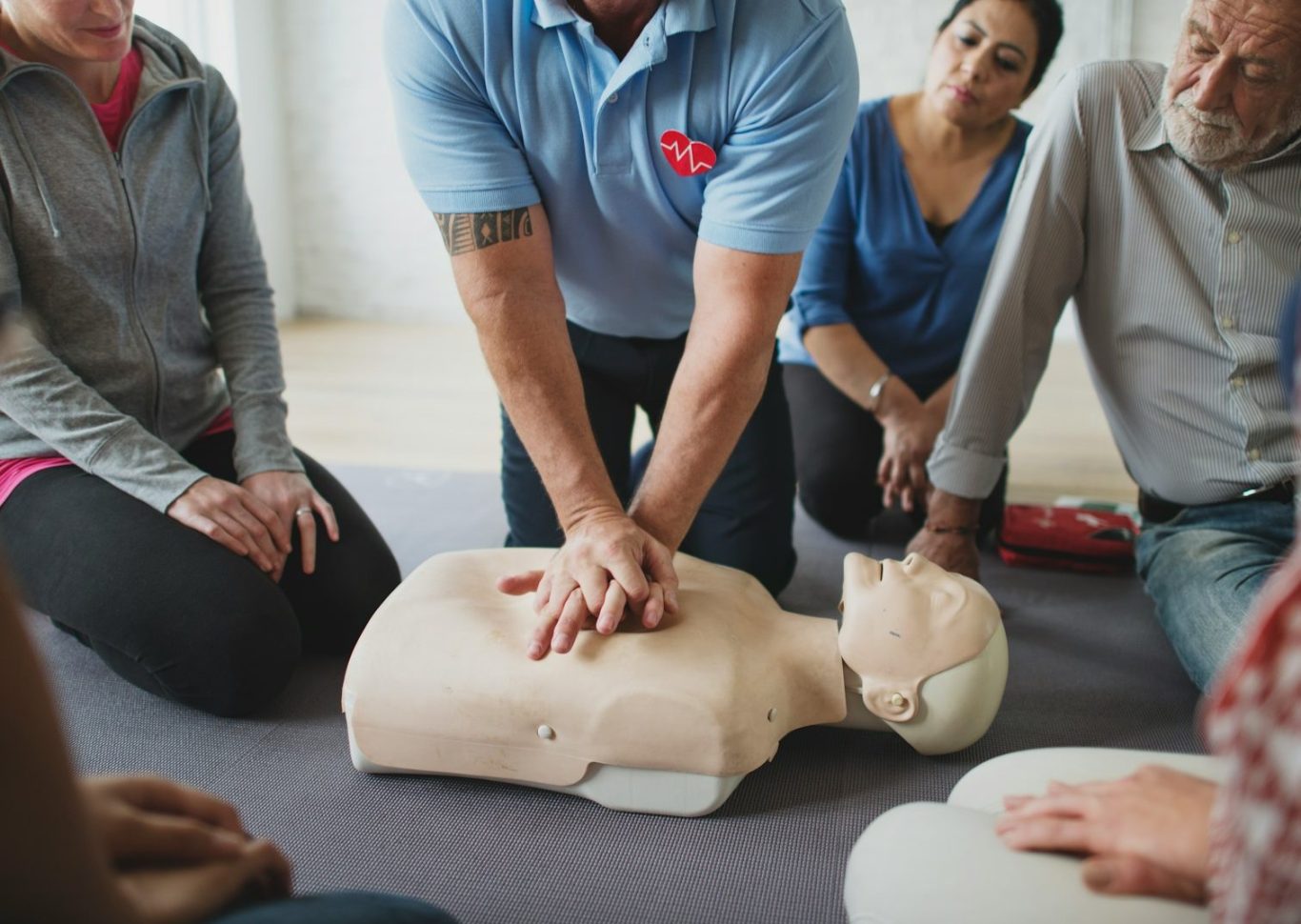
But my blame didn’t stop there. Oh, heck no. See, I was the first responder, the first one to perform CPR on him. I didn’t do it aggressively enough. I couldn’t get him positioned correctly because I didn’t have the strength to lower his massive body down onto the floor. I was too weak and ineffectual. I failed him again by being unable to resuscitate him. I was a bad wife, a bad partner, a bad nurturer, an ineffectual healer…
I didn’t save him. I convinced myself that it was my fault that Bob died. Shame coated my soul with his ashes.
“One and two and three and….”
If I close my eyes and allow myself “to go there,” I can conjure Bob’s dying under me. The feeling of the pale, clammy skin on his face. The heat on the back of his neck, still warm with life. Why didn’t I get to him in time?
“One and two and three and….”
His sweaty tee shirt under my hands as I inadequately pushed down on his massive chest towards his great, big, loving heart. Why didn’t I push harder?
“One and two and three and…”
The soothing, familiar smell of his shampoo and soap. His thick, dark, wavy hair. The scruff of his goatee. Why was I averse to giving mouth to mouth? Kissing a dead man?
“One and two and three and…”
The eerie look of peace and awe he left this world with, like he’d seen the face of God...
God!!
Why??!!
Why, God????!!!!!
…because I failed.
God, forgive me; I failed him.
All of it comes back so quickly if I let myself go there. “There” comes with massive moral injury, which is a specific type of survivor’s guilt. I should have been able to prevent Bob’s death.
In counseling we try to help people find out why some aspects of survivor’s guilt are really lodged in, talons piercing the heart. Part of it has to do with how we’ve dealt with earlier traumas. Our brains attempt to make sense and meaning of these first traumas then draw conclusions and assumptions to create a schema on how to survive if similar circumstances occur in the future. At one point, most of us healer types thought we could magically save people, or that it was our duty to be the fixer. My magical thinking trauma happened when I was 16.
During my junior year of high school, I came home one afternoon to find my mom sitting in a nonresponsive state at the kitchen table. When I attempted to talk to her about what was wrong, she collapsed onto the floor, nearly missing a blow to her head on the countertop. Mom hyperventilated very rapidly, completely unresponsive to me. Panicked, I thumbed through the phone book under the letter “J,” looking for my dad’s name, “Joe.” Thankfully I quickly grabbed my wits, found his work number in our rolodex, and informed him of the emergency. At 16 years old, I felt responsible for my mother’s medical episode and the duty to get her effective intervention. That situation was my feeder trauma which germinated an overly responsible part of me that feels a sense of imperative duty to save people.
After Bob passed, it took me several vulnerable consultations with various medical professionals including cardiologists to begin to chip away at my sense of guilt and shame. (Psych nerd alert: Guilt is the belief that we did something bad. Shame is a belief in ourselves as bad people.) Not only did I feel like I did something wrong, I took on shame and defined myself as a killer. This shame wouldn’t allow me to discuss the specifics of what went on when I attempted to perform CPR on Bob.
In November of 2023, I allowed myself to be the most vulnerable and open about the situation to one of my best friends, Wendy. We were vacationing in Leavenworth, kicking back and catching up on the couch. She asked me how I was doing with my grief, and I divulged it all, spilling every rancid bean. Wendy worked in healthcare and knew a great deal about CPR. Her frank honesty gave me some sobering information about the realities and limitations of CPR.
“Gera, you couldn’t have saved him. He was already dead.” Wendy wasn’t dolling out merciful bologna to attempt to make me feel better. She gave me brutal, honest, explicit, scientific facts, which was exactly what I needed. I needed evidence. After thirteen years, the talons of my survivor’s finally guilt loosed. Wendy’s words set me free. (I am so choked up writing this right now...)
Survivor guilt is well intended but very misguided. It seeks causality, begging us to mitigate future disasters by learning from our perceived mistakes. It cruelly mind-flays grief survivors into taking the blame even when there is none. We survivors need to work hard to rework our narratives. That internal battle takes bravery to talk about our shame, because honesty and openness are the antidotes to shame. And that process takes time.
Sometimes thirteen years.
Bob didn’t die because of me being ineffectual as a wife. He didn’t die because I was a failure as a first responder. I was not responsible for the death of my husband.
Bob…
died.