The Paradox of Grief and Growth
The Paradox of Grief and Growth
The transformation that can only come from loss
When people come into my office regarding grief, they mistakenly think that the human experience of profound loss is a linear journey, like a slow crawl out of a dark valley toward a distant light. However, over the course of treatment, they realize that grief is not a straight line, but a paradox defined by the simultaneous presence of two seemingly incompatible states: the crushing weight of devastation and an unexpected expansion of the soul.
This phenomenon, known as the paradox of grief, occurs because the very process that breaks us down also serves as a remarkable catalyst for our Post-Traumatic Growth (PTG).
The Paradox
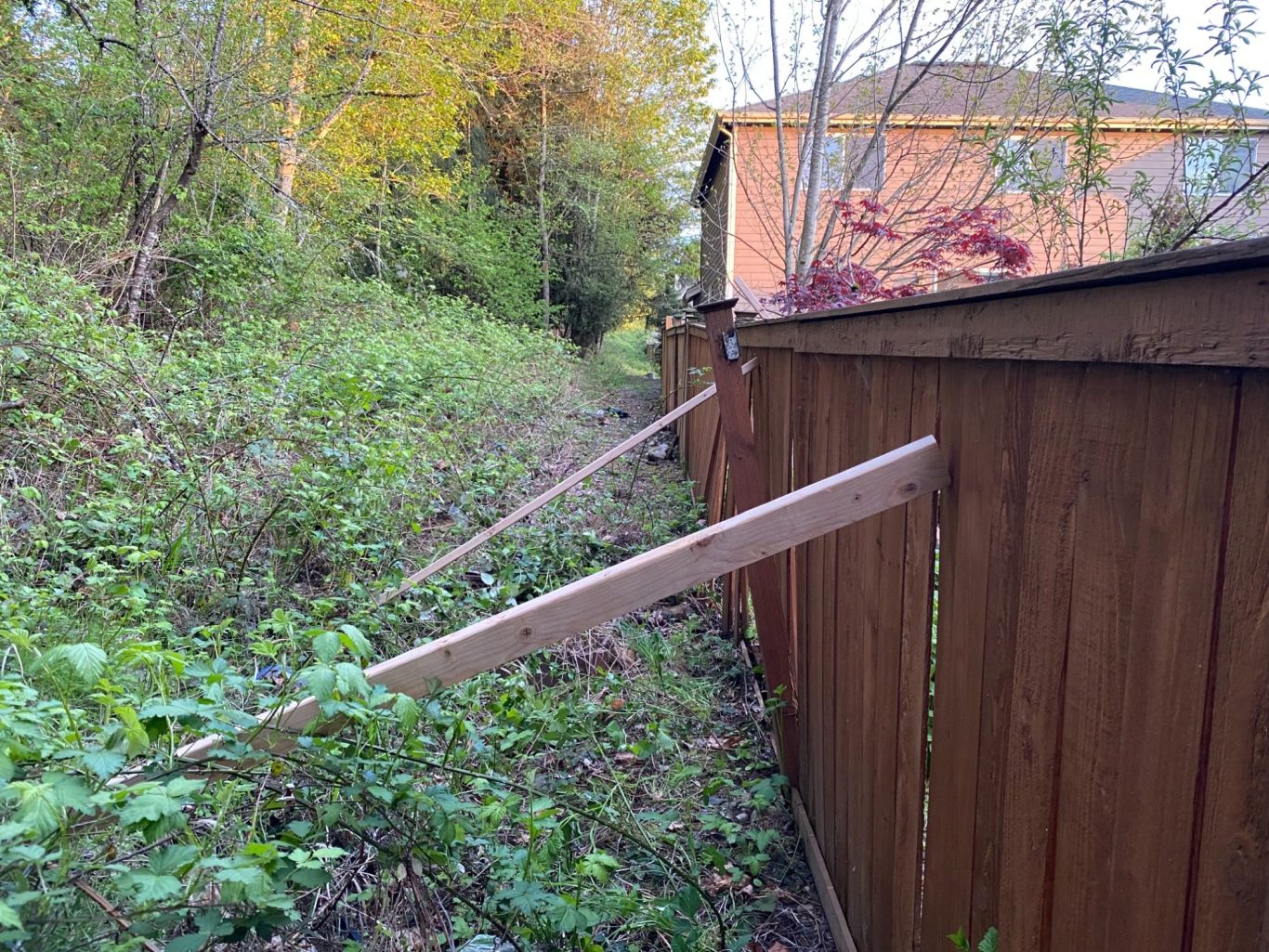
Looking at the side of my house next to the forest, I felt completely overwhelmed. A large swath of roughly 20’ x 40’ x 100’ of invasive blackberry bushes was menacing my yard. “If Bob were here, he’d rent a brush hog or wield a machete with ease and get rid of all of this in a weekend.” I stalled for a few years on how to manage this thorny nightmare.
Luckily, one of my friends, a former Marine, took me under his wing during my widowhood with encouragement and moral support. “Improvise. Adapt. Overcome.” This is the Marine Corps motto which helped me change my locus of control from that of helpless victim to capable warrior. I may not be able to handle a brush hog or a machete, but in my own, painfully slow way, I could fix the sticker bush situation. And I did. (Yes, the picture above is the before photo.)
At the heart of the paradox of grief lies the double reality of loss. On one hand, grief is a restrictive force. It narrows the world, drains color from the environment, and creates a shadow future, which is a constant awareness of the life that was supposed to be but will never be. The “If Bob Were Here” Life no longer existed and I was suffering when I pined for something that could never be my reality.
On the other hand, this total shattering of my assumptive world (the core beliefs we hold about safety, predictability, and fairness) created a vacuum. In that vacuum, there was a rare, albeit painful, opportunity to rebuild a foundation that was more authentic and resilient than the one that came before.
My assumptive world held that Bob was my protector and provider and as long as he was a rock for me, I would be ok. This delusion gave me a false sense of safety and minimized my self-efficacy. I was a lot more capable than I realized while living with a highly capable man. In the wake of his loss, I felt incapable of much of anything. With each painfully passing day, I trudged on and grew into a much stronger, self-reliant, confident version of myself. I’ve often thought of how proud my husband would be to see me now because I’ve grown quite a bit through this journey. And there’s a lot yet left for me to learn!
The paradox is that you cannot have personal growth without the shattering. As the poet Rumi famously wrote, "The wound is the place where the Light enters you." In psychological terms, the wound is the trauma, and the light is the resulting shift in perspective that constitutes growth.
My reality was that if Bob had been there, I would have never improvised, adapted and overcame. I would have made lots of lemonade for him and cleaned the house while he defeated the blackberries. I would not have done many things if my husband remained by my side. It was only due to his unexpected passing that life thrusted me towards immeasurable growth.
The Mechanism of Post-Traumatic Growth
Coined by psychologists Richard Tedeschi and Lawrence Calhoun in the 1990s, Post-Traumatic Growth is not the same as resilience. Resilience is the ability to bounce back to a previous state of being. PTG, however, is a transformation. It describes a person who has been changed by their struggle with adversity in five specific ways:
- Personal Strength: A newfound realization of "if I can survive this, I can survive anything."
- Closer Relationships: A deeper sense of connection and empathy for others who suffer.
- Appreciation for Life: A shift in priorities, where small joys are magnified and the trivial is discarded.
- New Possibilities: The courage to change paths or pursue dreams that were previously ignored.
- Spiritual Development: A deeper engagement with the big questions of existence and purpose.
The "Both/And" Reality
The danger in discussing growth after loss is the risk of toxic positivity, which in this case frames grief as simply a learning opportunity. To avoid this, one must respect the simultaneity of the paradox. A person in the throes of PTG does not stop grieving. They do not get over the loss. Instead, they learn to carry the grief in a larger container. They grow around their grief.
One can feel a profound, soul-aching longing for a deceased spouse while simultaneously feeling a more vibrant connection to nature than they ever felt before. One can mourn the shadow future of an unborn child while simultaneously dedicating their life to a new, meaningful cause that only emerged because of that tragedy. This is the "Both/And" nature of the human heart. It can be broken and open at the exact same time.
Turning Pain into Perspective
How does the paradox resolve itself? The bridge between grief and growth is deliberate rumination. After a loss, the mind naturally enters automatic rumination where it replays the tragedy in a loop of "why’s" and "what if’s."
However, as adjustment occurs, the individual begins to engage in deliberate rumination. They start to re-author their story. They look at the shards of their broken life and decide which pieces to keep and which to leave behind. This process is much like the Japanese art of Kintsugi, where broken pottery is repaired with gold. The vessel is not fixed to look new, but rather, its breaks are highlighted as a testament to its history and strength. The cracks are where the value lies.
The Blessings of Grief
Human beings are anti-fragile, creatures who actually grow stronger as a result of stressors. This does not mean the loss was worth it or that the pain is any less real. It simply means that grief is not a dead end, but a transformation.
By accepting the shadow future and the loss of the life we expected, we gain a strange, hard-won clarity. We see the world as it is: fragile, fleeting, and incredibly precious. The moral of this paradox is that while we cannot choose the tragedies that befall us, we can choose the architecture of the life we build from the ruins. We live in the tension between the "no longer" and the "not yet," finding that even in the deepest sorrow, there is a seed of a more profound, more empathetic version of ourselves waiting to bloom.
And that seed ain’t bloomin’ no blackberries…. Just sayin’.
Disclaimer: This article is not a substitute for therapy. If you or a loved one are struggling with loss, please reach out to connect with a therapist trained in grief recovery.