Inconsolable
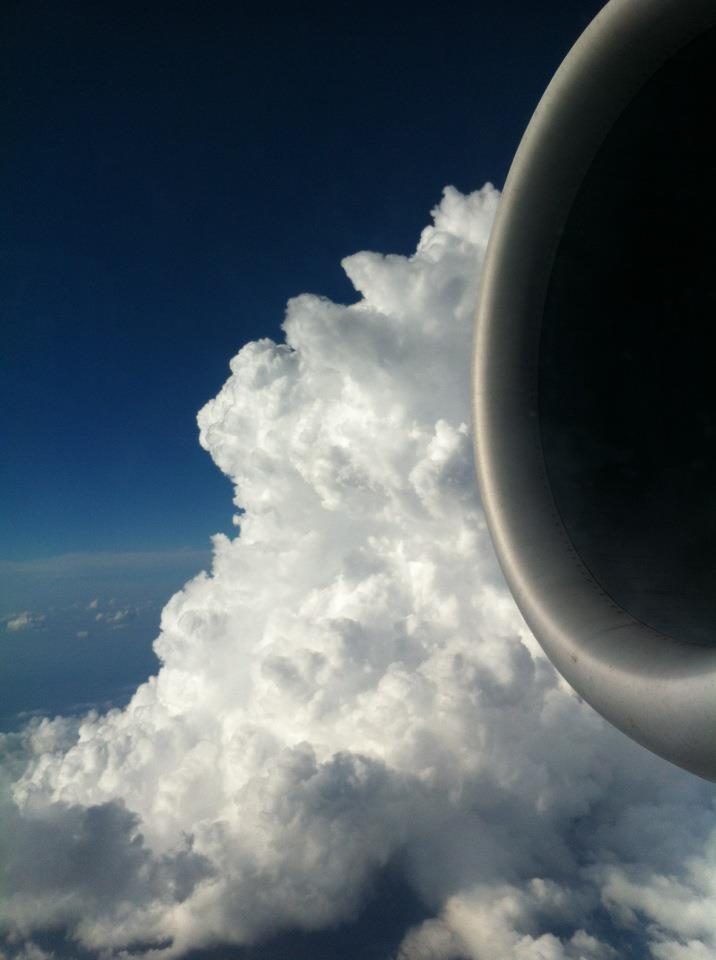
Inconsolable
Sometimes we don't want a silver lining
Up, Up and Away
One of the most awkward situations to be in is that of the frazzled parent with an inconsolable, screaming, pint-sized child at the beginning of a very full flight. Well-intended flight attendants often attempt a rescue with tiny bags of pretzels or cookies, hoping that food will pacify the howling. In my experience, these well intended gestures are almost always ineffectual. Sometimes, a hysterical child reacts by doubling down when a stranger intervenes. As a therapist, it breaks my heart because I know there’s nothing I can (or should) do. So, I clutch my heart and observe.
A few years ago, during a particularly full flight from Seattle to Sacramento, a little girl (about eight years old) and her tired father (about forty) sat across the aisle from me. After the plane was underway, the little girl began to "ugly-cry" in an agonizing, angsty protest. “Mama! Mama!!!” she wailed and railed as the plane flew farther and farther into the sky. Gasping between sobs, she used every alveolus in her lungs to extrude her utter despair.
The psychological function of crying is to elicit an empathic social reaction, and it’s especially potent for mothers. Deeply moved, my heart—along with those of about 43 others on the airplane—broke for this little girl. Everything in me (and the 43 others) wanted to lean over and attempt to soothe her. As a therapist, I knew better than to interfere. As a mother, I knew it would be ineffectual.
A child of divorce, this little girl was flying with her father to his home in California. Her pain was raw and real; her cries were utterly primal. Surprisingly, the passengers around her seemed to exude an energy of compassion instead of annoyance, which helped emotionally regulate the situation. It was a universal pain we collectively understood.
The father was an absolute rock star. He didn’t do much at all; he simply allowed his daughter to mourn. Tears poured out as she wailed in distress, yet her father remained calm and unflappable. His steady love provided a place of respite for her to land. He gently rubbed her back—not one “shush” or “be quiet,” but instead, “It’s okay, sweetheart. It’s okay to cry.”
Despite his own feelings—which I’m sure were a vast spectrum—he held a strong position, giving her permission to sit with the emotions she needed to feel in that moment. She needed to be witnessed, heard, and validated. She was grieving. It was a beautiful, yet bittersweet parenting moment to observe: grace and space at its finest.
Children can’t cry forever, although it sometimes feels like they do. Eventually, the cries turned into sobs, which melted into whimpers. By the time we were flying over Oregon, she was nestled into her father’s side and had succumbed to sleep.
Absolute Zero
There is nothing we can do to bring back our loved ones. Few times in life do we face absolutes that hit us with a blunt and unapologetic sobering reality. Inconsolability is the period before the rebuilding begins. It is the time spent standing in the rubble, before you have even accepted that the building is down. Vastly uncomfortable, it is a necessary part of the healing process. For some, the map remains so profoundly shattered that the way out feels non-existent. That isn't a failure of will. It’s a testament to the scale of the loss.
Neurologically, your brain has a map of your world. When an absolute happens, that map is suddenly, violently wrong. You can’t just download a new reality. The period of inconsolability is the time it takes for the brain to stop reaching for what isn't there. Every time you cry because you went to call them or expected them to walk through the door, your brain is doing the slow, agonizing work of updating its map. You stay in the rubble because your brain literally hasn't learned the way out yet.
Loss is often invisible. On the outside, oddly the world keeps moving. Traffic flows, dogs get walked, and people drink coffee. But on the inside, a universe has ended. We stay inconsolable because we need the internal reality to match the external reality. We are waiting for the world to stop and acknowledge the scale of the disaster. As grief expert David Kessler says, "Grief needs to be witnessed." If we move on too fast, we feel like we are erasing the truth of what happened.
In the rubble, you are still surrounded by the pieces of what you lost. Even if they are broken, they are theirs. Moving toward rebuilding means stepping away from the wreckage and into a new life where that person or thing is truly, permanently gone. The rubble is painful, but it is familiar. The After is a terrifying, empty field. We stay in the inconsolable phase because, in a strange way, the pain is the last connection we have left.
Psychologically, hitting an absolute forces a death of the old self. You are not just grieving a person who passed away. You are also grieving the version of you that existed with them. You stay in the rubble to sit with the big questions: Who am I now? What actually matters? This sobering reality strips away the trivialities of life. Staying there is a form of deep, spiritual inventory that cannot be rushed.
Sometimes, we don't want a silver lining or a path forward. We just want someone to sit in the dust with us and agree that the building was beautiful and that its collapse is a tragedy. It’s ok to cry. And when you are tired of standing in the rubble alone, I am here to sit in the dust with you, honoring the beauty of what was lost. When it’s time, we can find the map together.
The Path Through the Rubble
The weight of Absolute Zero can make it feel as though the rubble is your permanent home, but even in the deepest inconsolability, your mind is doing the quiet, exhausting work of survival. Moving forward does not mean leaving your loved one behind or pretending the building didn't fall. Moving forward with your grief means allowing your life to slowly grow larger around the loss.
In PGD therapy, as I work with you to update your brain’s internal map, the sharp, jagged edges of the wreckage begin to integrate into the landscape of who you are becoming. The despair is not a dead end but it is the painstaking process of re-mapping a world that has changed. You may always carry the grief, but eventually, you will find that The After is no longer an empty field, but a place where it is possible to breathe, to remember, and to belong to your life once again.
Disclaimer: This article is not intended to be a substitute for therapy. It is for informational purposes only. If you are struggling with a heavy grief, please contact me to set up an appointment. You are not alone.