Emotional Masking
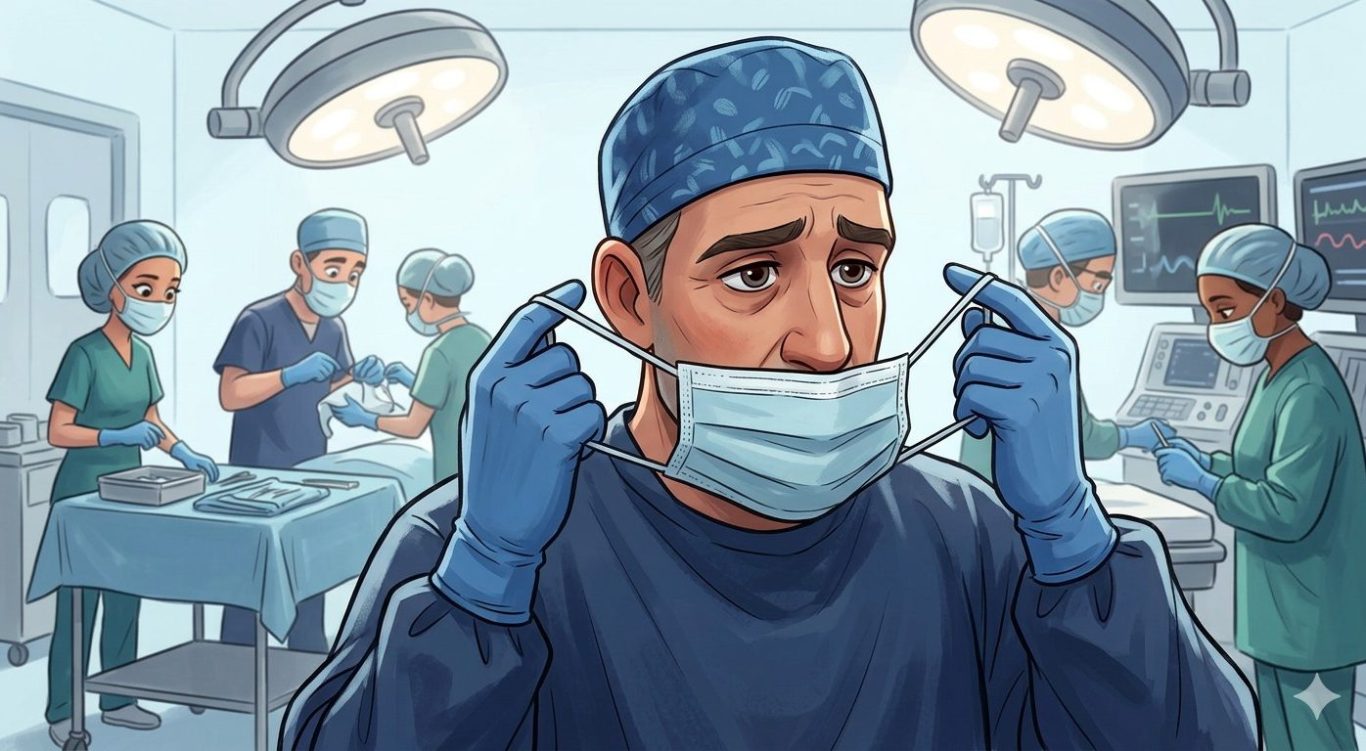
Emotional Masking
Don't let 'em see you sweat
Days were always full for Peter.* As a defense lawyer, no minute was wasted. Hours were filled with meticulous behind the scenes research and analysis, client interviewing, and tense days of high stakes appearances in the courtroom. At home, he had two children who needed his presence and stability. There was no off ramp, except for the occasional Sunday. On some Sundays, Peter would throw his mountain bike in the back of his truck and head to the hills to burn off some stress on the trails. Lately, it was difficult to get himself to get out of bed on Sundays let alone out and about. He was in a deep state of grief and emotionally stretched to his limit. Consequently, he was exhausted. The energy that Peter needed to remain sharp and non-reactive in such a high pressure career and as a high functioning dad was immense.
In order to perform his job duties, Peter had to not only had to laser focus on his work, but he also had to present to the world a confident, intelligent, astute tiger. Performance was everything. The weight of the loss of his beloved wife, Lynn*, was immense. However Peter’s professional persona was necessary. His emotional masking during grief had a dual purpose. It allowed him to continue to function at a high level by keeping his grief behind a dam. It also gave him a reprieve from the constancy of grief. Masking with such emotional armor, however, comes at a cost.
Masking as Necessary
High achievers earned their positions with intelligence, grit, strength, confidence, and consistency. They are counted on for the very qualities that grief challenges. Grief necessitates an emotional bandwidth that is typically compartmentalized in a person’s ordinary pre-grief world. Holding back the flood of the hefty additional volume of thoughts and feelings requires an immense amount of cognitive effort.
For a high achiever, emotional masking serves as a vital survival mechanism in the short term. For many, “the dauntless person who gets things done” is their entire identity. They often define themselves by their competence, resilience, and reliability. Losing that to grief feels like a second death, a death of identity. Work provides a sense of agency when life feels out of control.
Society is not very comfortable with long-term, messy grief that is Prolonged Grief Disorder (PGD). By masking, an individual avoids the pity stare and ensures that colleagues continue to treat them with professional respect and capacity rather than with fragile empathy. Masking prevents them from being mothered or managed at work, providing a bubble of containment from grief.
Masking is a way to defend oneself against constant rumination about the deceased, which is exhausting. As therapists, we encourage people to allow grief to be experienced and to focus on restoration-oriented activities, which allows the nervous system to have a temporary break from the loss-oriented intensity. When high achievers use masking to compartmentalize their emotions, the unintended naturally begins to happen. They remove themselves from grief.
How High Achievers Manage Their Grief While Masking
When a high achieving individual is grieving they don’t just hide their feelings. They deploy compensatory behaviors that begin before they even leave the house. As a fire chief, Paul’s* ability to respond to multi-agency incidents was a key component of his job description. Being surrounded on a daily basis by life or death situations focused his mind to highly wall off his own personal grief which, on most days, took all of his energy. By the end of the day, he had little energy left to spend on much more than survival.
Hiding his feelings began as soon as Paul put on his uniform for work. The ritual of wearing work clothes, of being surrounded by familiar props (laptop, briefcase, stethoscope, etc.) and being in the work environment itself help the grieving high achiever to step in to the professional persona and out of the role of “grieving human” for a few hours. Paul’s uniform gave him both protection from a flood of grief emotions during his work hours and also helped him hold together the expectation of performance as the top brass. However, he noticed that at a time when he had to process the complexity of his daughter’s death, the uniform felt like a straight jacket.
Another compensatory behavior I see in my work with high achieving individuals is that they have a tendency to overprepare to an obsessive degree. Memory lapses and brain fog are common during intense grief and if these individuals cannot rely on their natural quick wit due to emotional overload, then they rely on 100 pages of scripted notes. Mary* found it difficult to teach after the loss of her husband to cruel pancreatic cancer. Despite a 30-something year career as a middle school teacher, concepts that were simple and basic sometimes completely eluded her during the height of her grief brain fog. She wasn’t able to wing it or infuse creativity in her work like she used to. To compensate, Mary poured over lessons plans on Sunday afternoons and arrived at school an hour early every morning to force her focus and attention on the tasks for the day.
One of the qualities that helps high achievers do their job is to box up their emotions while they’re working. It’s almost as if they take on a role of a character and role play. This ability can, at some point, become detrimental because grief is not permitted to organically meander the way it needs to. Functional dissociation can occur, which is the sensation of watching yourself from a distance. Paul explained that when he was training recruits, it was like seeing himself in a movie, going through the motions, detached. Although it was helpful to be able to work, operating on auto pilot wasn’t congruent with his internal reality. Dissociation is a defense mechanism the mind deploys when feelings are too raw. The mind cannot distinguish between the past and present trauma when it experiences pain, and dissociation provides a buffer from the distress. This also prevents processing the emotions and thoughts necessary for healing.
The Double Bind of Being a High Achiever
Professional identity for the high achiever is often built on a person’s ability to be impenetrable, yet grief is inherently vulnerable. As a result, they tackle grief with their strengths. High achievers often orient to grief like a project – something to manage, optimize and solve. As intellects, they tend to approach grief as something to be analyzed and overcome instead of something they need to feel. By reading books, learning about PGD and discussing it as an abstract concept, they intellectualize loss instead of experiencing it viscerally.
Instead of slowing down during PGD, high achievers speed up. The intense energy used to keep it together requires a vast amount of internal resources, leaving little left over. Overfunctioning is a coping skill. Eighty-hour work weeks or complex new problems give their brain little else to occupy itself with, leaving little room to process the pain and meaning of the loss. Since high achievers are experts at toggling, they are able to detach and pivot from a private crying spell to a keynote speech in under sixty seconds. Peter shared with me how he used a trip to the men’s room to gather his composure before heading into the intensity of the courtroom. A quick cry or release of emotion was enough to allow him to continue work at a frenetic pace.
Because they are praised for their performance, high achievers see their grief as a liability. They are expected to be strong, the rock, the dependable one, and this can keep them trapped in a sense of duty and shame, not wanting to disappoint those who rely upon them. This expectation can make it difficult to prioritize their humanness and becomes an impediment in healing. When they do start to experience grief on a deeper level, shame can rear up in the dissonance. “I am broken,” and “I should be handling this better” can intensify their withdrawal, avoidance and hyper-focus on work or routine as a coping mechanism. The abilities that helped them achieve are also the ones that can interfere with their healing.
The Cost to Not Integrating Grief
Masking isn’t a permanent solution, but rather an interest-only loan. Eventually the principal comes due and the interest is high. When grief is not integrated, it sits in the background. When the high achiever finally stops, due to a vacation, a minor illness, or a retirement, the grief hits with the same intensity it had on day one. Grief, I tell my clients, will always have its voice heard somehow, some way,, no matter how good someone is at putting on the forward-facing facade. When the life pause happens, the mind finally has the bandwidth to process the loss and all that comes with it.
If someone masks for long periods of time without honoring their grief, one consequence can be emotional numbing and the person can disconnect from their genuine emotions outside of work. The resistance to processing feelings can globalize, insulating a person from feeling anything. Eventually it can result in a loss or estrangement from one’s identity. Peter decided it was necessary to prioritize counseling during his busy schedule when he realized he was no longer feeling empathy for his clients and friends anymore. He also found that he was not able to shed any tears for his beloved wife.
The energy required to keep up the persona is so great that individuals often suffer from decision fatigue. The area of the brain responsible for complex thinking and self-control becomes strained, also resulting in a decline of willpower and rational judgement. In order to conserve energy, the brain looks for short cuts by either avoiding decisions altogether or acting impulsively without thinking through consequences. Grace* said it was impossible to make dinners; nothing sounded good and grocery shopping felt impossible. She signed up for a meal service for a few months which helped her get proper nutrition without having to use her mental energy on meal planning. The same mental energy used for decisions is required for self-regulation. When fatigued, it becomes more difficult to resist temptations such as impulse buying and eating unhealthy foods. Using this work around, Grace said the quality of nutrition she was taking in improved dramatically.
If the mind refuses to process the loss during PGD, then the body usually takes over. High achievers often suffer from unexplained chronic pain, GI issues, autoimmune flares, and high blood pressure. People may have panic attacks with racing heart and what feels like a heart attack. “The body keeps score” of the trauma.
Masking creates a relational wall. As a result, the quality of intimacy one had with others diminishes. In some cases, it goes into hibernation. High achievers sometimes have a difficult time being authentic as they are very conditioned to life in the “I’m fine” persona. Their partners and friends may perceive that they are not truly present but uninformed about what the PGD sufferer is experiencing on the inside. Maintaining the mask requires so much emotional energy that they have nothing left for their living loved ones. They can become functionally present but emotionally absent.
High achievers are very concerned about what happens if the mask slips. The result is potential diminution of one’s credibility, perceived as a personal weakness or lack of professional control. “Don’t let them see you sweat” is a mantra they adhere to fiercely and one of the consequences of this is a double bind of invisibility. Although everyone thinks you’re fine, they don’t know that you’re really not. The mask can disguise the facts too well and others may not reach out to offer accommodation or support because there’s not a lack of observable evidence that you need it. Both Peter and Paul found it isolating as they operated under this self-imposed expectation. It was assumed by their coworkers that they were handling their grief journeys well and it seemed that no one make adjustments for their state of cognitive overload and need for grace and compassion.
Part of the journey of grief is a necessary reduced ability to cope. The prefrontal cortex needs to be off-line so that the thoughts and feelings that accompany the loss can be worked through. An integration of grief requires both compartmentalization (restoration) and time sitting with the emotions (loss orientation). The result is arriving at a place where a person is on the path to become increasingly integrated, functional, and balanced.
When The Mask Accompanies You Outside of Work
Masking is a coping skill that makes a person feel more in control and provides a sense of stability at a time when life is anything but. When the mask comes off, the world can see that we’re in pain. As someone who others’ looked to for emotional stability, the performance rarely ends outside of the office. Patrick felt like he had to perform well in his social arena, too. There were school activities for the kids, their sports and extracurriculars. Patrick’s late wife was a volunteer and everyone knew the “power couple.” As a result, Patrick felt burdened to handle others’ emotional responses to his pain. It was disconcerting for others to see him in a state of disrepair. Because he was a private person, Patrick did not want to talk about Lynn’s death or his grief with these acquaintances. He also wanted his children to have a respite from their grief while on the sports fields and in the performances because when they were home, Lynn’s loss was apparent in every room of the house. Social masking helped Patrick have a social respite and also created a bit of social isolation at the same time.
Grief avoidance is one of the hallmarks of PGD. No one wants to feel the pain of profound loss and masking is an armor that attempts to protect one from such raw emotion. Long term masking can block authenticity, minimize needs and thwart a healing process. Grief is a normal and healthy response to loss. We are designed to experience it, cope with it, adjust to it and learn from it. If we allow grief to do its work inside of us, it will be transformative as we emerge. The new iteration of self that is forged is a stronger, healthier self due to the growth that accompanies the grief process. It’s understandable that we don’t want to experience it but, as I said earlier, grief will always have its day. Learning how to validate it and listen to it as a teacher of sorts is part of what we do in counseling. The result is a healthy integration of grief and a relief of the crippling symptoms. The reality is that in order to grow through grief, you must put down the mask and give yourself the grace and space to heal along the windy path.
*Peter, Paul, Mary, Lynn and Grace are fictious names. Circumstances have been altered to protect the identity of these individuals.
Gera McGuire, MA, NCC, LMHC, is a specialized mental health counselor serving the Maple Valley and Enumclaw Plateau communities, as well as clients throughout Washington and Montana via telehealth. With advanced clinical training from the Center for Prolonged Grief at Columbia University, she provides evidence-based support for those navigating anxiety, depression, relationship challenges, life transitions, and the complexities of 'stuck' grief after a loss.
Disclaimer: This article is for informational purposes only and not a substitute for therapy. It is not a guide to diagnose any mental health conditions.
If you or someone you know is experiencing symptoms of depression, anxiety, PGD, PTSD or any other concerning mental health symptoms, please contact Gera to set up an appointment.